7 Ways to Improve Customer Service in Property Management



Most of the time, "best practices” blog posts are written by professionals working in the industries they’re writing about. Getting those perspectives is certainly helpful, but wouldn't it make sense to learn what great customer service looks like from the people who are receiving those services?
That’s exactly what this post is. I’ll walk through my experience as a renter and explain exactly what the property management company I used did to make my experience renting from them great.
The result: a list of seven tips you can follow to improve customer service at your property management company.
1. Make it easy to schedule showings of your properties
The first interaction most people have with a property management company is filling out some sort of form to show interest or book an appointment to view a property. That was my experience as well.
This company’s showing request form was easily accessible and quick to fill out, only asking the necessary questions to get started (name, email address, the size of the apartment I was looking for, price range, and viewing availability). This was something I appreciated in a day and age where it seems any time you buy anything they want your email, phone number, SSN, and a blood sample.
Throughout this process, I was looking at multiple places, so when I got a prompt reply and confirmation for the viewing time I requested, it stood out in the crowd. Other places I looked into were less prompt, ghosted me, or started down the million questions rabbit hole before letting me book a time. In those cases, I simply moved on.
In the cities I was considering, there were tons of options, and that additional friction in the process was an annoyance I simply didn’t need to deal with — so I didn’t.
How to simplify the property viewing process
Many property management platforms make it easy for you to add forms and booking widgets to your listings. If you have access to these but aren't using them, start taking advantage of those features. Simplify your forms, let prospective renters book viewing times on their own, and send a follow-up text to let them know their appointments are confirmed.
If you're not using property management software for your listings and are handling requests via email instead, there's still a lot you can do to improve the experience. Using an email management tool like Help Scout, you can:
Create an auto-reply email that's sent to prospects who fill out your form. It could contain a booking link from a service like Calendly or TidyCal so prospects can book time for a viewing instantly, or it can inform them when you'll follow up to schedule a time for them to view the property.
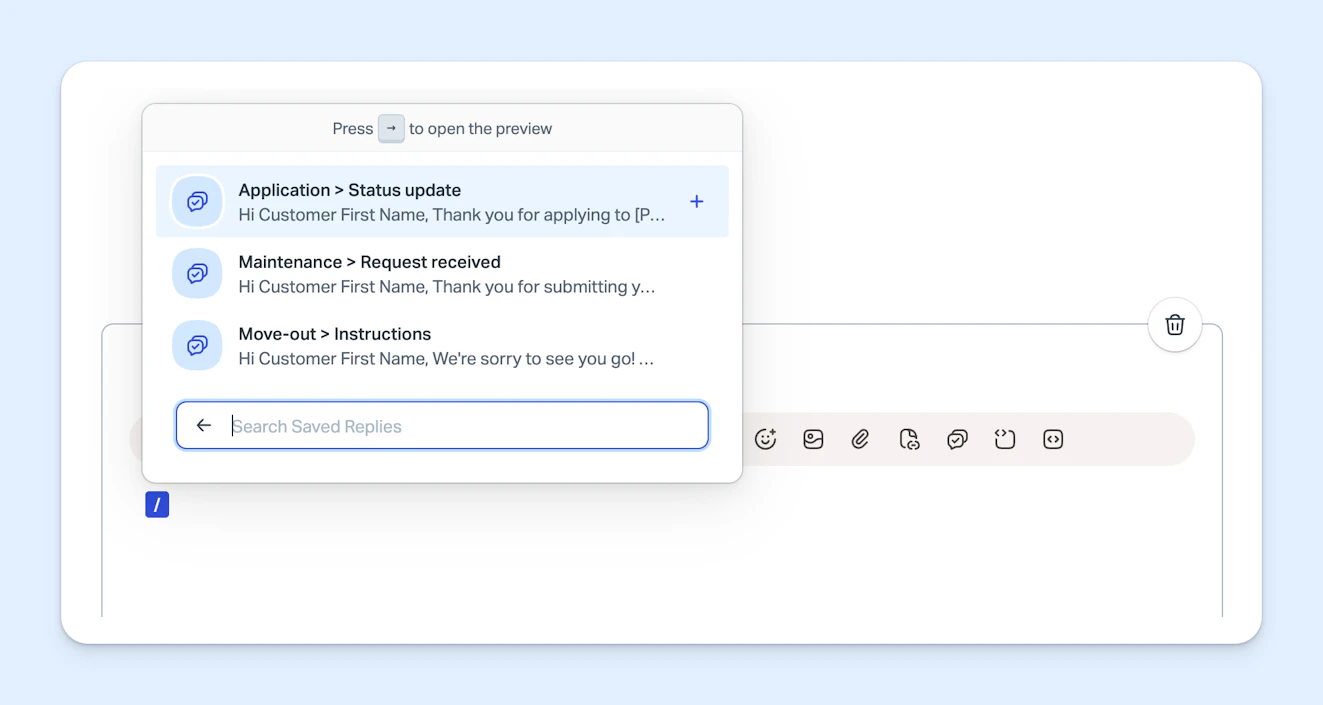
Use round-robin routing to auto-assign new leads to leasing agents equally. If you aren't already sending an auto-reply email, those agents could create a saved reply that includes their calendar booking link to reply to prospects and get viewings booked quickly.

2. Give the prospect everything they need for a great viewing
When we had an agreed-upon time, the property management company sent tips for getting to the building and detailed instructions on what to do once I arrived. Once there, I didn’t have to wait; the leasing agent was on-site and ready to get started. Much like the quick response to the request form, I really appreciated that.
As we toured the building and unit, the agent answered all of my questions. Research shows that one of the main reasons prospective tenants prefer guided tours is to get their questions about the building and neighborhood answered in the moment. This was true in my case, so I was glad they were willing to take some extra time to go over all of the questions on my list.
What was really impressive was that they were honest even when it meant telling me about a certain shortcoming the property had. No building is perfect, and it felt good having someone acknowledge that. Being upfront about those things made it a lot easier for me to believe the positives they shared, too.
Another thing I valued was that the agent didn’t take me around to show me things I wasn’t interested in. For example, this particular building had a fitness center and pool. While those are certainly selling points for some renters, I told them those weren’t things I needed to see, so we skipped them and kept the tour shorter.
Looking at apartments can be exhausting, and feeling like you’re going through someone’s pre-planned spiel can add to that. They gave me agency in that sense and let me dictate how the tour went, which made me feel like they were listening and valued my time.
How to make your property viewings great
Deliver all of the information the prospective tenant needs to get to and access your property ahead of time. (This is another area where a saved reply or auto-response email can help.) Send it as soon as the viewing is booked to be sure the prospect has all of the information they need.
Opt for guided tours over key codes; prospects like to have someone on-site to answer any questions they have about the property.
Don't make the prospect wait around awkwardly. Show up a little early so you're there when they arrive.
Answer all of the prospect's questions honestly. Sharing honest thoughts on what's not great will encourage the renter to trust you more when you share the things that are great.
Find out what the prospect cares most about, and personalize the viewing for those things. You can ask what they're interested in during the viewing or send a pre-viewing survey out beforehand using a tool like Google Forms or Tally.
3. Provide everything needed to make a final decision
At the end of the tour, the agent let me know when the floor plan of the unit I was interested in would be available and also gave me details about the application process. This included things like the security deposit required, additional information they might need from me if I decided to move forward, and contact information for their office if I had any more questions.
They were also quick to follow up after the showing and share all those details in writing. I really can’t state enough how much I appreciated how prompt this management company was whenever we spoke. Many of the places I checked out put the onus on me to chase them down for additional information, and while I can do that, it’s definitely nice not to have to.
How to increase the chances of a successful signing
Signing a lease is not a decision to take lightly, which is why most tenants do their research and weigh their options before committing. To increase the chances that your property will be high on their list, consider the following:
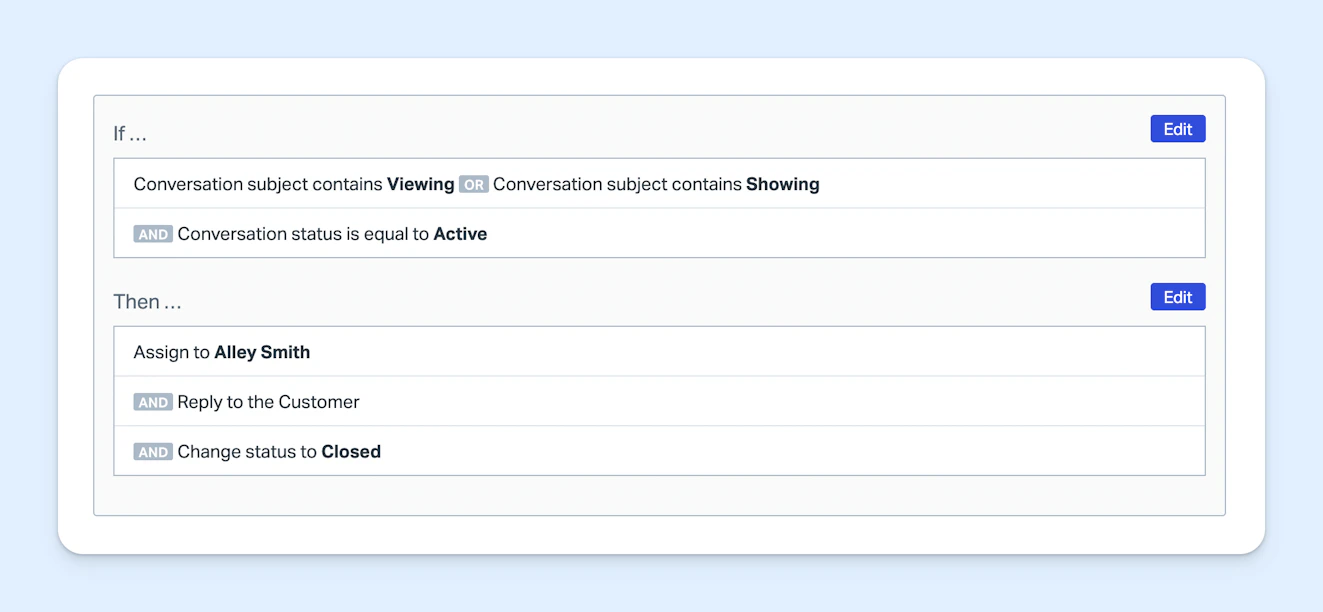
Send a follow-up email after each showing that covers what was discussed during the tour and everything necessary to move forward in the process. You can automate this by setting up a workflow or scheduled send in your property or email management software.
In addition to the email above, make sure that your team is available to answer any new questions that may pop up following a showing. You may want to set up email filters to route messages into a shared folder or view so these messages don’t accidentally wind up at the bottom of one person’s inbox or held up when a team member is out of office.

4. It’s better to overcommunicate than to undercommunicate
The building I ended up choosing made it a simple decision by being responsive and considerate in the days leading up to me signing. Even still, I was a bit apprehensive. It was my first lease, and it’s a big commitment. People can nail a first impression, but if you stick around long enough, you’re bound to see their true colors.
Luckily for me, once I’d moved into the property, its management company kept up the proactive communication. Whenever there was the potential for a day-altering event, they were good at providing communication via multiple channels. For example, when there was plumbing maintenance happening, they sent out emails, posted signs on the doors of the building, and made sure to slip a note under all the tenants’ doors.
While that may seem a bit over the top, it’s easy to forget things like that if you’re not regularly reminded. It’s not something you want to forget, either. Very little is worse than getting halfway through a shower only to discover that the building’s water has been turned off for the next several hours!
How to keep communication going strong after move-in
Provide ample notification any time you expect disruptions to utilities service or access to building amenities. Legal requirements around giving notice will vary depending on your location, but as a general rule, try to provide at least a week’s warning.
Notify tenants prior to entry to their units for showings, inspections, maintenance, or repairs. Plan on giving at least 24 hours notice, but be aware that your specific state (if in the U.S.) may require as much as 48 hours.
Post any building-wide notices in multiple locations to increase the chance that folks will see the announcement. Aside from sending tenants an email or posting in building common areas, you might also consider adding a notice to your company’s website or residents’ portal. While it may sound complicated, products like Help Scout’s messages feature make this as easy as copy and paste.
5. Make it easy to get help
Speaking of a residents’ portal, my property management company offered one for my building, and it was really helpful.
If you’re not familiar, a resident’s portal is an online resource where tenants log in and then have access to self-service materials (like an FAQ page) and often some sort of direct line to staff. This could be in the form of an online form, phone numbers that are only available to residents, or even live chat for issues that require immediate attention.
My building’s portal had an FAQ page that was fairly basic and mostly answered common questions about topics like parking and pets. It also provided some links to tenant-specific resources in there, like companies that offer renters insurance (which was nice as I had not had it before).
The portal also had a maintenance request form and the option to chat with someone from the property management team. The chat feature only operated during business hours, but it allowed you to talk with someone in real time if you needed a fast response. I only used it once when my shower drain randomly started overflowing when I wasn’t using the shower. Definitely a problem you don’t want to have, but after chatting with the team, they were able to check out the plumbing, diagnose the issue, and fix the problem quickly.
Overall, having a place specifically for tenants to communicate issues or questions was nice, and it made it feel like I had a direct line with the property team. I imagine they managed those comms from a centralized place, but it felt more personal, like it was our own little community taking care of one another.
How to leverage both real-time and self-service channels to improve the tenant experience
While you may be used to handling tenant communications via your work email or phone, there are other options that can complement those channels. Deciding which is best for you and centralizing them can streamline your team’s operations and improve your tenants’ experiences. Wondering what that looks like in practice?
If you use property management software, you can create a residents’ portal that has all of the information tenants need — announcements and answers to FAQs, contact information, live chat for urgent issues, and a billing management section where people can securely pay their rent or submit a security deposit.
If you use a communications management platform like Help Scout, you can:
Create a help center that outlines not just FAQs but everything a renter would need to know, arranged by topics like leasing, billing, building amenities, pets, etc. For example, in a billing section you might have an article about the different ways to pay rent, change a payment method for online payments, etc. Similarly, under the leasing section, you could have articles about lease lengths offered, how to renew your lease, or how to end a lease.
Provide both an email form as well as a live chat widget so that tenants can choose the way they’d like to communicate.
Add an AI-powered chatbot to your help center and company website to answer questions 24/7 based on the content in your help docs as well as any other information you provide.
Make announcements or ask for resident feedback. In addition to providing a heads up for things like service disruptions, you can also use the same feature to surface surveys to capture resident sentiment.


The real goal of a help center is to be a self-service resource for people. It’s a place they can find answers on their own, and on their own time, without the need to wait on a response. It’s an approach that many people prefer.
For property management companies, having a self-service resource isn’t only nice to have for tenants, it can also reduce the burden on building staff, keeping easy-to-resolve issues out of your inbox altogether.
6. Make lease renewal and move out processes simple
As all things inevitably do, my lease — and my time with this particular property management company — eventually came to an end.
As always, they were very timely with communication as my lease edged toward completion. The property managers let me know well in advance the date by which I needed to say whether I was going to renew, end the lease, or rent month-to-month.
They also outlined what was involved with each option and how to proceed. I assume this is required by law, but it felt courteous to me, and I appreciated having all the options and related information laid out so I could make the best decision.
As it turned out, I was in the process of buying a house with my soon-to-be wife and already knew I would be moving on to greener pastures. When I let them know, they congratulated me and shared what needed to be done prior to my lease’s end to ensure I got my full security deposit back.
Along with sharing the information, they were very responsive to my questions. You know, things like “How deep of a clean do I need to do?”
I know that may seem like a basic thing, but it had been my first rental experience and I had A LOT of anxiety about doing something wrong and not getting the money back. So, I appreciated them being patient and thorough with their answers.
How to keep the end of a tenant’s lease stress free
Create a method of keeping track of all of the leases and associated renewal dates on your books. If you use a property management system, there is likely a lease tracking feature built into the system. If not, consider creating a dedicated Google or Outlook calendar for your active leases.
Reach out to tenants 1-2 months ahead of their lease coming to an end, providing all of the information they need to decide whether or not they want to re-up. This will give them time to decide if they want to stay as well as time to find a new spot if they determine it’s time to move on.
When a renter gives notice to vacate, let them know what they need to do to receive a full refund of their security deposit. Do they need to deep clean the oven or the fridge, or do you require an in-person walkthrough before they turn in their keys? Put it in writing to set expectations.
Automate where you can. Depending on the communication tool you use, you may be able to automate lease renewal or move out email sequences using workflows. But even if you can’t fully automate, make sure you at least have templated responses saved so that the process is fast and consistent across tenants.
7. Leave a lasting impression
There were a couple of instances where my building’s management company really went above and beyond. Before we wrap things up, I wanted to share them with you to illustrate the importance of going the extra distance when you can.
The first happened when I was about halfway through my lease. There’s a yearly baseball tournament in Omaha (where I live) that brings in a lot of visitors, and the building I lived in was directly across the street from the baseball stadium. Because of that, they used the apartment parking lot as overflow parking for the tournament.
We didn’t have assigned spots or have to pay additional money for parking, so they could’ve easily just put up a sign and let us know that there wouldn’t be parking for a couple of weeks. Instead, they gave all the tenants a couple hundred dollars off rent that month to account for the inconvenience.
It was another case where they did something they didn’t have to, and it certainly lowered my level of annoyance each day when I had to make the 10-15 minute trek to get to my apartment.
The second incident was during move out. We were closing on our new house a little over a month before my lease ran out. I figured I’d simply pay the month; I did sign a contract after all. However, when I told them my plans, they told me they would prorate my last month’s rent if they could find a new tenant before my lease was up.
It might be common practice, but it felt monumental in the moment. At its core, you could almost argue that’s the key to outstanding service. It’s when someone does something or goes out of their way simply because it’s the right thing to do. And they did just that — they found a renter quickly, and they gave me most of that month’s rent back along with the security deposit.
How to deliver an experience that makes a tenant want to write a blog post about you years after the fact
At the end of the day — as it is with many industries — I think a great tenant experience really comes down to nailing the fundamentals:
Communicate early and often. Keep potential and current tenants in the loop. That may sound like a big burden, but with tools like chatbots and automated emails, it’s not nearly as big a lift as you might think.
Tailor the experience. Different renters need different things from you. Take the time to get to know people as best you can, and when possible, adjust accordingly.
Treat tenants like people. This is an odd one to write out, but it’s worth saying: Tenants are people. Treat them with the same empathy and consideration you’d want to receive from a landlord.
Above all, remember that while you may have hundreds of tenants, they only have one property manager, and very little is more important to a person than the place that they call home. So, be good to them.
Finally, if the good feelings in this section aren’t swaying you, 84% of people surveyed said that property reviews affect their renting decision. Going above and beyond is good for business.
Delivering great customer service in property management
Choosing where to live is a big decision, so it makes sense you’d look for not only a good physical space in a desirable location but also a company you feel you can trust.
Standing out from the rest may not be easy, but if you take the time and invest in creating a great customer experience, it’ll be well worth the effort.
Jesse Short
After spending a few years working as a support agent, Jesse made the switch to writing full-time. He is a Help Scout alum, where he worked to help improve the agent and customer experience.